Chicago doesn't have an ocean port, but it sits at the end of the two most important intermodal corridors in the US. Most inbound sea freight for Chicago-based importers arrives through the Port of Los Angeles or Long Beach on the West Coast, or through New York and Savannah on the East Coast, then moves by rail or road into the Chicago metro.
We manage the full cycle, from the origin country through to your Chicago facility. That means booking the ocean freight, handling customs clearance at the port of entry, and coordinating the inland leg into your warehouse or distribution center. You deal with one team, not three.
Freight Forwarding Chicago, IL
Navia's Chicago office handles freight forwarding across sea, air, and road for businesses importing, exporting, and distributing freight across the Midwest and beyond. If your supply chain runs through Chicago, our team is here.
✔ CTPAT-certified
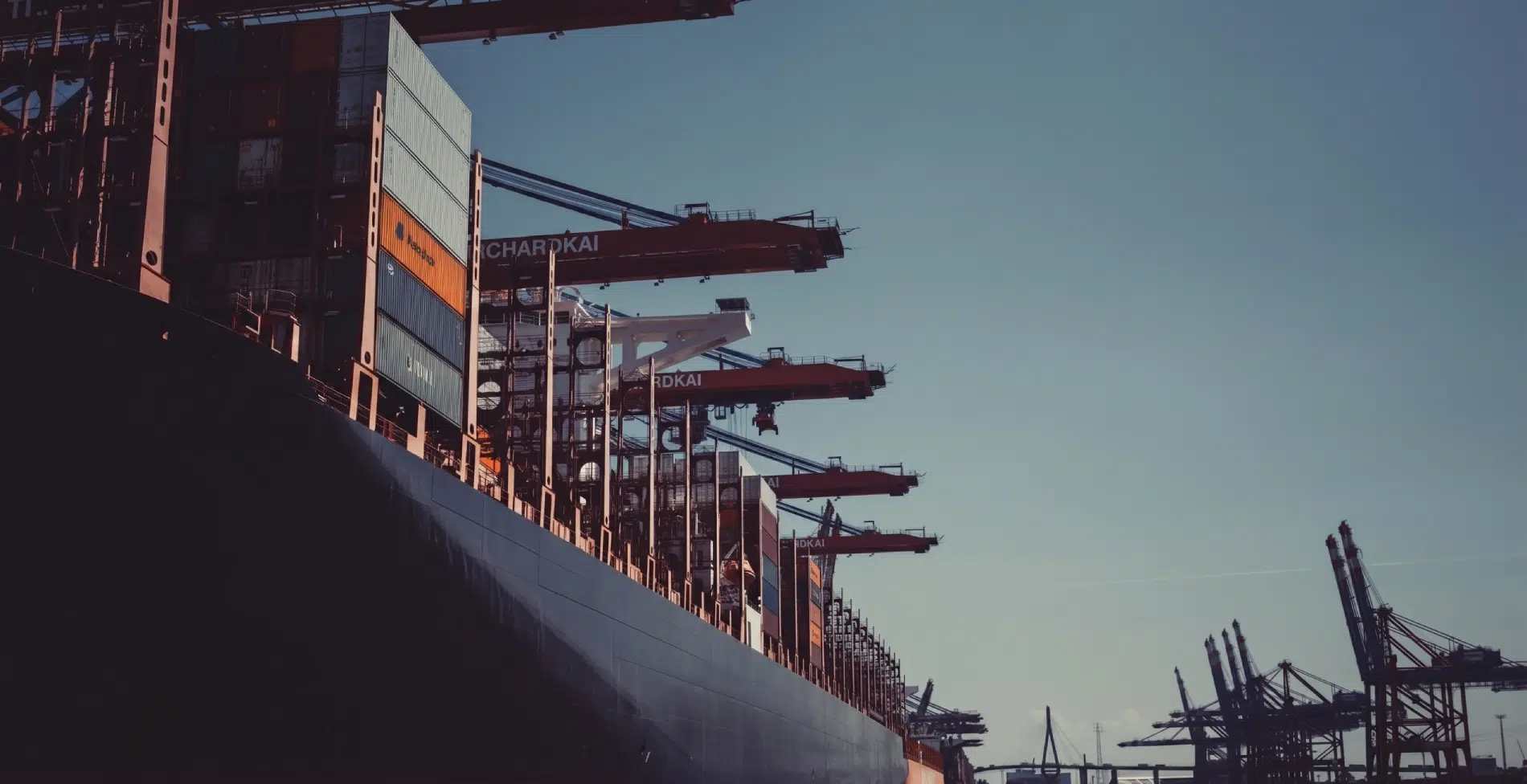
Why Chicago Is a Different Kind of Freight Hub
Most major US freight hubs are defined by a port or an airport. Chicago is defined by all of them. Six of the seven Class I railroads converge here, roughly 25% of all US rail freight passes through the metro, and O'Hare ranks among the top US gateways for international air cargo. Add five major interstate highways intersecting in the city, and you have a logistics hub with no real equivalent in the interior of the country.
For importers, what that means in practice is this: from Chicago, ground transit times reach 50% of the US population within 24 hours and 90% within 48 hours. If you're building a distribution strategy for the Midwest, the central US, or the country as a whole, there's a strong argument that Chicago is the most efficient place to anchor it.


Sea Freight - Inbound From the Coasts

Air Freight Through O'Hare

O'Hare International Airport handles over 2 million metric tons of freight annually, with direct freighter services connecting Chicago to Shanghai, Hong Kong, Frankfurt, Seoul, Tokyo, and London. For time-critical or high-value shipments, it's one of the strongest air cargo gateways in the country, with direct connections to the trade lanes that matter most for US importers.
Our team manages air freight bookings, documentation, and customs clearance at O'Hare, with onward distribution by road to any Midwest address.
Road Freight & Midwest Distribution

Once freight clears at the port of entry or arrives at O'Hare, we coordinate final-mile delivery by road. Whether that's a single delivery into your Chicago warehouse or an ongoing distribution run across multiple Midwest locations, we manage the domestic leg as part of the same service.
US Customs Clearance - Handled In-House

Customs delays are avoidable when you have the right team managing them. Our in-house customs team handles classification, documentation, and CBP clearance for freight moving through Chicago, covering both air freight at O'Hare and sea freight arriving via the coasts. No third-party broker in the middle, one team accountable for the whole process.
With tariff classifications and duty rates shifting more frequently than they have in years, having a forwarder who manages customs directly makes a meaningful difference to how reliably your cargo clears.
The NaviaHub - Live Visibility Over Every Shipment
The NaviaHub gives you a real-time view of your entire supply chain, with exception alerts that flag at-risk shipments before they go late, KPI reporting against your SLAs, and SKU-level tracking from origin through to your Chicago facility. It connects directly to your ERP or WMS so your internal systems stay current without manual data entry.
It's included for every Navia customer, regardless of volume.


Importing Through Chicago - The Intermodal Advantage
A growing number of importers are routing freight inland via intermodal rather than holding it at the coast. BNSF Logistics Park Chicago in Elwood is the largest inland port in North America, processing more than 3 million container lifts annually, and CenterPoint Intermodal Center in Joliet is the largest master-planned intermodal park in the country. For high-volume importers distributing across the Midwest, routing containers directly into Chicago via rail can meaningfully reduce cost and transit time compared to coastal warehousing and onward trucking.
If that's a conversation worth having for your supply chain, we'll have it. We review your current freight setup before we move anything, and if there's a better way to structure your inbound flow, we'll find it.

Our Chicago freight forwarding office
Midwest distribution and inland freight, managed by our local Chicago team. Explore our other US freight forwarding locations below.
This location
Chicago
Midwest distribution and inland freight from the central US hub.
Address
200 N. Martingale Rd, Suite 400
Schaumburg, IL 60173
200 N. Martingale Rd, Suite 400
Schaumburg, IL 60173
Other US location
Los Angeles
West Coast imports and Trans-Pacific freight from China, Vietnam, and Southeast Asia.
Freight forwarding in Los Angeles ›
Freight forwarding in Los Angeles
Other US location
Atlanta
Southeast US distribution and air freight through Hartsfield-Jackson.
Freight forwarding in Atlanta ›
Freight forwarding in Atlanta
Other US location
Houston
Gulf Coast imports and Latin America trade lanes.
Freight forwarding in Houston ›
Freight forwarding in Houston
Talk to our Chicago freight team.
Whether you're moving containers through the coasts, air freight through O'Hare, or building out a Midwest distribution model, our Chicago team is ready to help.
Get in touch
Does Navia handle customs clearance in Chicago, or only at the coast?
We handle customs clearance at the port of entry, which for most Chicago importers means Los Angeles, Long Beach, or New York for sea freight, and O'Hare for air freight. Clearance happens before your cargo reaches Chicago, and we manage it in-house as part of the same service.
What's the typical transit time for sea freight from Asia to Chicago?
Transit time depends on the origin and routing. Sea freight from Shanghai to the West Coast runs approximately 13-18 days, with an additional 2-4 days by rail into Chicago. From Asia via the East Coast, total transit typically runs 25-45 days depending on the port. We'll give you current options based on your specific origin when you get a quote.
Can you help us set up a Midwest distribution model, not just manage individual shipments?
Yes. We work with businesses that need a freight partner for ongoing import programs, not just one-off shipments. If you're building out a Midwest distribution strategy, we'll review your current setup and advise on routing, mode selection, and how to structure the inbound supply chain efficiently.
Do you work with manufacturers and industrial businesses, or mainly retail and ecommerce?
Both. Chicago's freight mix includes manufacturing inputs, industrial equipment, retail goods, and ecommerce inventory. We work across all of these, and the NaviaHub gives every customer the same level of visibility regardless of what they're moving.